
Buy Zopiclone for Insomnia - Safe and Reliable Sleep Aid
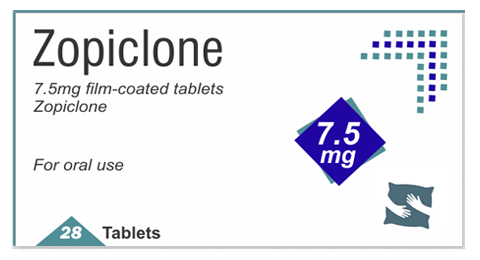
| Product Name: | Zopiclone |
|---|---|
| Dosage: | 7.5 mg |
| Price: | $75.00 |
| Where To Buy Online | Online Pharmacy |
Insomnia treatment made simple
Complete a short online consultation and, if appropriate, your prescription will be approved online. Your medication is then delivered direct to your door in discreet packaging within 2-3 business days.
Zopiclone is a prescription hypnotic used for short-term insomnia in countries where it is licensed. It can help with falling asleep and staying asleep, but the benefit has to be weighed against next-day impairment, dependence and the difficulty some people experience when stopping. Its chemical relationship to another sleeping medicine does not make their doses or prescribing instructions interchangeable.
For U.S. readers, the distinction is essential: zopiclone is not FDA-approved. Eszopiclone, available as Lunesta and in generic forms, is an FDA-approved insomnia treatment. The names are similar because the molecules are closely related, not because they are two labels for an identical medicine. [1]
U.S. availability: eszopiclone (Lunesta)
For a focused explanation of approval and prescription status, see whether zopiclone is available to buy in the United States.
Zopiclone contains two mirror-image molecular forms, called enantiomers. Eszopiclone is the S-enantiomer. This explains the relationship more accurately than describing Lunesta as a new brand of zopiclone or assuming that it is simply a stronger version.
U.S. eszopiclone tablets contain 1 mg, 2 mg or 3 mg. A zopiclone strength of 7.5 mg cannot be carried across to an eszopiclone prescription. Comparing the numbers on the packaging without identifying the active ingredient would compare different treatments as though their dosing scales were identical. [2]
The distinction also affects practical instructions. The U.S. Lunesta label cautions against taking it with or immediately after a meal; a heavy, high-fat meal can delay its effect on sleep onset. By contrast, the UK Zimovane information states that food does not change zopiclone absorption. Instructions copied from one medicine to the other can therefore be wrong even when the names look familiar. [2] [3]
What zopiclone does, and what improvement means
Zopiclone acts at the GABA-A receptor complex, enhancing an inhibitory signaling system in the brain. Its chemical structure differs from benzodiazepines, but that difference does not remove the potential for sedation, impaired coordination or dependence. "Non-benzodiazepine" describes its drug group; it is not a safety guarantee. [3]
Sleep improvement is not a single measurement. A person may fall asleep sooner but still wake repeatedly, or spend longer asleep but feel less alert the following morning. Those outcomes should not be collapsed into an unqualified claim that a treatment produces "better sleep." A useful assessment separates the nighttime benefit from daytime functioning.
| Outcome | What to record | Why it matters |
|---|---|---|
| Falling asleep | Approximate time between trying to sleep and falling asleep | Distinguishes sleep-onset difficulty from other sleep complaints |
| Staying asleep | Nighttime awakenings and estimated time awake | A shorter wait for sleep may leave this problem unresolved |
| Morning functioning | Sleepiness, concentration, balance and memory | Nighttime improvement may be offset by unwanted daytime effects |
| After treatment | Sleep changes after a planned reduction or discontinuation | Helps distinguish continuing insomnia from a temporary change after stopping |
This framework is a way to describe an individual response, not a scoring system that determines which prescription someone should receive. It also avoids the misleading assumption that feeling strongly sedated necessarily demonstrates a successful insomnia treatment.
What comparative research can tell us
A systematic review published in 2004 assessed 24 trials involving 3,909 participants, comparing Z-drugs with benzodiazepines or with one another. The investigators found few clear, consistent differences. Reporting limitations meant that only some outcomes could be pooled. [4]
That result does not establish that every sleeping medicine is equivalent. It means the included studies did not support a simple, dependable ranking across the outcomes examined. The review is also old: it should not be presented as a current head-to-head comparison covering every treatment available today.
A separate randomized trial published in JAMA in 2006 compared cognitive behavioral therapy, zopiclone and placebo in 46 adults with chronic primary insomnia. Their mean age was 60.8 years. Treatment lasted six weeks, with follow-up of the active groups at six months. CBT performed better than zopiclone on three of four measured outcomes. [5]
At six months, sleep efficiency in the CBT group had risen from 81.4% to 90.1%; the zopiclone group changed from 82.3% to 81.9%. Sleep efficiency is the proportion of time in bed actually spent asleep. Total sleep time was similar across groups.
This was a small, single-center study of older adults with a particular form of chronic insomnia. It cannot establish that zopiclone never helps, or predict how a younger individual with a brief episode of insomnia will respond. Its relevance is the distinction between short-term medication use and durable management of persistent insomnia.
Onset, tablet strengths and treatment length
The NHS gives an approximate onset of 30-60 minutes. This is a population-level estimate rather than a countdown: not falling asleep at a particular minute is not an instruction to repeat the dose. NHS instructions say not to take more than one dose during the same night or double a missed dose. [6]
A tablet strength and a treatment plan answer different questions. The strength identifies the amount of active ingredient in a tablet. It does not identify the appropriate dose for every adult, establish a course length or indicate when another dose is appropriate. Likewise, the number of tablets in a package does not determine how long treatment should continue.
UK Zimovane labeling limits treatment to a short course, generally no longer than four weeks including tapering. It also provides lower starting doses for certain groups, including older adults. These are prescribing details for a licensed UK product, not evidence of U.S. approval or a self-treatment plan. [3]
Onset and elimination are different concepts. The first describes when an effect becomes noticeable; the second concerns how the body clears the medicine. A quick onset does not establish that the medicine will have cleared by the following morning. For the same reason, a claimed "duration of sleep" should not be treated as a guarantee about driving ability.
Dependence, tolerance and stopping treatment
These terms describe different problems. Tolerance means that the same dose may produce less effect over time. Physical dependence involves adaptation to repeated exposure, with symptoms possible when treatment is reduced or stopped. Addiction includes difficulty controlling use despite harm. Physical dependence does not, by itself, mean that someone has an addiction.
In January 2026, the MHRA announced stronger warnings about addiction, dependence, withdrawal and tolerance for Z-drugs and related medicine groups. Its review emphasized that these problems can arise even when medicines are taken as directed. [7]
Consequently, the end of treatment belongs in the initial discussion. After regular use, suddenly stopping or making a large reduction can trigger withdrawal. The stopping plan should reflect the actual dose, duration and symptoms rather than a universal schedule copied from an article.
A return of poor sleep can be difficult to interpret. It may reflect the original insomnia, rebound symptoms after stopping, or a combination. Automatically resuming or increasing treatment without reviewing the sequence can obscure what happened. The useful information is the timing of symptoms relative to dose changes, together with other changes in health or medication.
Side effects: common symptoms and urgent problems
A metallic or bitter taste, dry mouth and next-day tiredness are recognized effects. Dizziness, reduced concentration or poor balance also matter because the consequence may be a fall or impaired driving rather than simply an unpleasant sensation. NHS advice is to avoid driving, cycling and machinery for at least 12 hours after zopiclone, and longer while impairment persists. [6]
Complex sleep behaviors are a different concern. Sleepwalking, preparing food or driving while not fully awake may occur without a clear memory afterward. U.S. FDA warnings for eszopiclone, zolpidem and zaleplon describe serious injuries and deaths associated with these behaviors. They can occur after an initial dose as well as during continued use. [8]
These episodes should not be dismissed as an ordinary vivid dream. FDA guidance is to stop the implicated medicine and contact the prescriber immediately. Severe breathing difficulty, collapse or inability to wake someone require emergency assistance.
The regulatory warning for U.S. Z-drugs and the UK instructions for zopiclone are separate sources. Both are relevant to understanding this drug group, but a warning on one product should not be presented as though it were the complete prescribing information for another.
Other medicines, alcohol and individual health conditions
A medication review needs exact names, not broad categories such as "a painkiller" or "an allergy tablet." These descriptions can refer to products with very different ingredients. The same applies to nighttime combination remedies: a familiar brand name does not reveal every active component.
The NHS lists interactions with other sleep or anxiety medicines, opioid painkillers, sedating antihistamines and some antidepressants, antibiotics and antifungals. Alcohol can intensify the effects and cause breathing problems or make waking difficult. [6]
The UK Zimovane product information lists severe sleep apnea, respiratory failure, severe liver impairment, myasthenia gravis and previous complex sleep behavior with zopiclone among its contraindications. [3] This is not an exhaustive eligibility checklist; identifying one absent condition does not establish that treatment is suitable.
Pregnancy and breastfeeding need a separate assessment. NHS information says zopiclone is not usually used during pregnancy, although exceptional short-term use may be considered. It can enter breast milk. Sedating medication is also a reason not to share a bed with a baby. These circumstances should not be reduced to a blanket assurance that a low dose is safe. [6]
Where medication fits in longer-term insomnia care
For persistent insomnia, the central question is what will sustain improvement after a medicine is withdrawn. The NHLBI describes CBT-I as the usual first treatment option for long-term insomnia. It typically involves a structured six- to eight-week plan, delivered in person, by telephone or online. [9]
CBT-I is more specific than a list of sleep-hygiene tips. Stimulus control works on the association between bed and wakefulness. Sleep restriction adjusts time in bed to consolidate sleep. Cognitive work addresses worries and expectations that perpetuate sleeplessness. Relaxation and sleep education can be included.
This distinction matters when someone says they have "already tried everything" after changing pillows, avoiding coffee or keeping the room dark. Those changes may help, but they do not demonstrate that a structured CBT-I program has been tried and failed. Medication and behavioral treatment should also be judged over appropriate timeframes: benefit on a particular night and benefit months later are different outcomes.
A clear account of symptoms makes those comparisons more useful. Record whether the main problem is falling asleep, waking repeatedly, waking too early or feeling unrefreshed, and whether the pattern changed during treatment. This gives a more informative picture than a single statement that a tablet is "strong" or "weak."
Frequently asked questions
Is Lunesta simply purified zopiclone?
Eszopiclone is one enantiomer of zopiclone. "Purified" can misleadingly suggest that racemic zopiclone is contaminated, while "more modern" implies a clinical advantage without specifying an outcome. The useful distinction is the active ingredient, its approved uses and its own prescribing instructions. [2]
Does FDA approval mean eszopiclone is appropriate for everyone?
No. The U.S. label contains restrictions and warnings, including a boxed warning for complex sleep behaviors. Approval establishes an authorized treatment with defined labeling; it does not remove individual contraindications, interactions or adverse effects. [2]
Does a bitter taste mean the dose is wrong?
A bitter or metallic taste is a recognized side effect. It cannot, on its own, establish whether the dose is correct, whether the treatment is working or whether a tablet is genuine. Those are separate questions. [6]
Why can I feel sleepy in the morning after sleeping all night?
Sleeping through the night does not prove that a medicine's effects have ended. U.S. Lunesta labeling warns about next-day impairment, which can occur without a person recognizing it. A full sleep opportunity is important but is not a guarantee of unimpaired performance. [2]
Can the price of zopiclone abroad predict the U.S. cost of Lunesta?
No. A meaningful price comparison must identify the active ingredient, strength, number of tablets, brand or generic status, country and payment arrangement. Zopiclone and eszopiclone should not be combined into a single price range. A low advertised number with an unspecified package does not provide a usable comparison.
References
- FDA: zopiclone and eszopiclone approval status.
- Lunesta: U.S. prescribing information, DailyMed.
- Sanofi: Zimovane 7.5 mg, UK Summary of Product Characteristics.
- Dundar et al. Comparative efficacy of newer hypnotic drugs for the short-term management of insomnia. Human Psychopharmacology. 2004;19:305-322.
- Sivertsen et al. Cognitive behavioral therapy vs zopiclone for treatment of chronic primary insomnia in older adults. JAMA. 2006;295:2851-2858.
- NHS: Zopiclone patient information.
- MHRA: strengthened dependence and addiction warnings, January 2026.
- FDA: Taking Z-drugs for Insomnia? Know the Risks.
- NHLBI: Insomnia treatment.